
Buying your first electric scooter is an exciting moment, especially with the huge number of models available today. For many beginners, an e-scooter becomes more than a fun gadget—it becomes a practical commuting tool and a reliable part of daily life. Because of this, it’s essential to take your time and understand what truly matters in a scooter. Without knowing the basics, it’s easy to end up with a scooter that lacks range, power, comfort, or durability. Learning the important factors beforehand ensures your investment feels worthwhile and gives you the long-term riding experience you’re looking for.
Motor Power and Performance Expectations
Why Motor Power Matters for Beginners
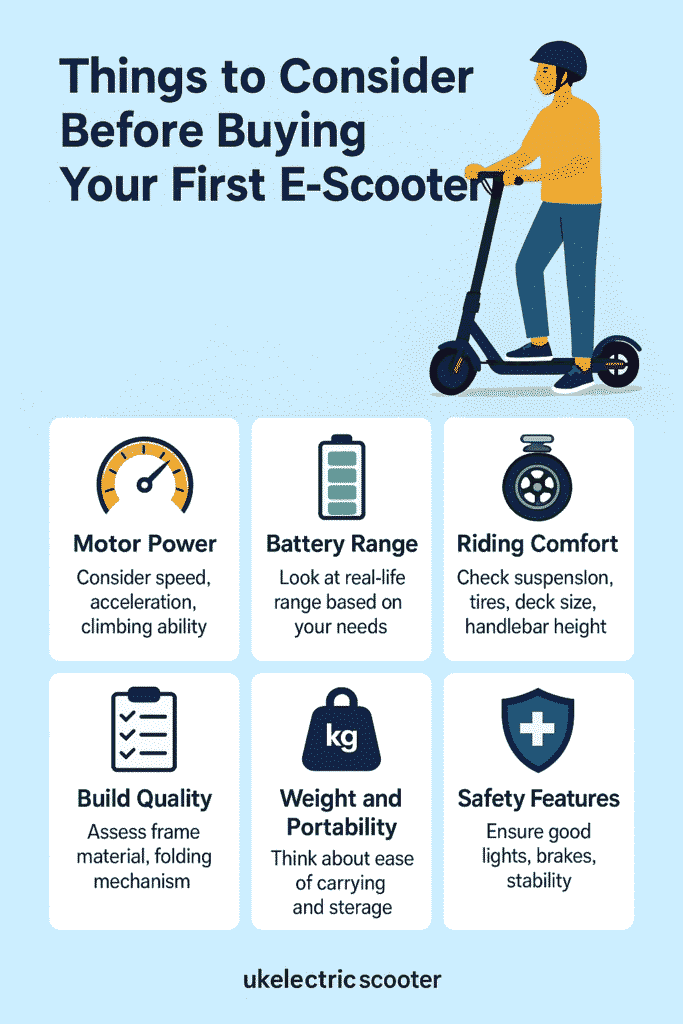
One of the first things to understand is the motor’s power, which influences speed, acceleration, and hill-climbing ability. Many first-time buyers assume lower-powered scooters are enough, but they often struggle on inclines and feel slow during everyday use. A more powerful motor provides smoother acceleration and better control, especially in urban environments where quick responsiveness matters. At the same time, extremely high-powered scooters may consume more battery and feel too aggressive for new riders. Striking a balance between control and performance will lead to a smoother learning experience.
Battery Range and Real-World Usage
How Battery Capacity Affects Daily Rides
Battery capacity determines how far the scooter can travel on a single charge. Manufacturers often advertise their maximum range under ideal test conditions. Real-life factors such as rider weight, temperature, terrain, and riding style can significantly reduce that number. A beginner may quickly feel frustrated if the scooter cannot complete daily commutes without frequent charging. It’s best to choose an e-scooter with a comfortable buffer between your daily usage and its range, ensuring you never feel anxious about reaching your destination or running out of power.
Riding Comfort and Handling
Suspension, Tyres, and Ride Smoothness
Comfort plays a major role in how enjoyable your electric scooter will be. Beginners often underestimate how important a smooth ride is—especially on uneven pavements or rough roads. Suspension systems, tyre type, deck width, and handlebar height all contribute to stability and ease of control. A scooter with proper suspension or large air-filled tyres offers better shock absorption, while a sturdy deck allows you to stand comfortably for longer periods. The more stable the scooter feels, the more confident you’ll feel while learning.
Build Quality and Long-Term Durability
Why Construction and Materials Matter
Build quality affects not only how long the scooter lasts but also how safe it is. Cheaper models often cut corners on frame strength, waterproofing, and folding mechanisms. A beginner may not notice these details immediately, but over time, a poorly built scooter can become loose, noisy, or unsafe. A solid folding mechanism, reinforced stem, and durable deck material ensure stability and peace of mind. If you plan to ride regularly or commute through various weather conditions, prioritizing strong construction becomes essential.
Weight and Portability Considerations
Finding the Right Balance Between Power and Convenience
Weight is one of the most overlooked aspects of buying an e-scooter. Some models are easy to carry, while others feel more like heavy machinery. If your routine involves public transport, stairs, or frequent lifting, a lightweight scooter can be a major advantage. However, lighter models typically come with smaller batteries and weaker performance. Heavier scooters, while more powerful and durable, may be impractical for users who need portability. Choosing the right weight depends entirely on your lifestyle and daily commute.
Safety Features for New Riders
Brakes, Lights, and Stability Enhancements
Safety should be a top priority when selecting your first electric scooter. Features like bright headlights, taillights, brake lights, and reflectors ensure visibility—and visibility is one of the biggest factors in preventing accidents. Brake systems also vary, from basic electronic brakes to more reliable disc or drum brakes. A stable deck, quality tyres, and balanced geometry help beginners maintain confidence while riding. The more stable the scooter feels, the easier it becomes to learn proper control.
Legal Considerations and Local Regulations
Understanding Where You Can Legally Ride
In many regions, particularly the UK, legal restrictions affect where electric scooters can be ridden. Privately owned e-scooters cannot currently be used on public roads, pavements, or cycle lanes, although rental scooters are legal in certain trial cities. Many new buyers don’t realize these limitations until after purchasing a scooter. Before buying, it’s important to know the rules in your area to avoid fines or legal issues. Even if laws change in the future, choosing a scooter that aligns with expected regulations ensures long-term usability.
Budget, Value, and Feature Balance
Choosing a Scooter That Matches Your Needs and Price Range
Electric scooters vary widely in price, from budget-friendly beginner models to premium machines built for performance. While cheap scooters may seem appealing, they often lack durability, comfort, or range—leading to disappointment later. Higher-priced scooters may offer more than a beginner needs. The ideal choice provides balanced performance, good safety features, reliable build quality, and a reasonable battery range. Investing slightly more upfront often saves money long-term by avoiding repairs or replacements.
Customer Support and Spare Part Availability
The Importance of Choosing a Reliable Brand
Another often-overlooked factor is the availability of spare parts and customer support. Electric scooters require occasional maintenance, such as replacing tyres, brake pads, or even batteries. Choosing a reputable brand ensures you can easily access replacement parts and service if something goes wrong. Many no-brand or budget scooters lack proper support, leaving owners frustrated when issues arise. A trusted brand provides long-term security and confidence.
Matching the Scooter to Your Lifestyle
Choosing Based on Your Daily Routine and Travel Needs
Before buying, think realistically about how and where you will use the scooter. A commuter may need long-range power and strong durability, while a casual rider might prioritize portability and light weight. If your area has hills, you’ll need a stronger motor; if you often ride on rough roads, suspension becomes essential. Your lifestyle should guide your purchase, ensuring the scooter enhances your daily routine rather than complicating it.
Final Thoughts on Buying Your First Electric Scooter
Making a Confident and Informed Decision
Buying your first e-scooter is a personal decision that requires balancing performance, comfort, safety, and practicality. When beginners take time to understand the important factors—such as motor power, range, build quality, and legal considerations—they are far more likely to choose a scooter that provides long-term satisfaction. A carefully chosen scooter not only enhances daily mobility but also offers an enjoyable, reliable, and safe riding experience for years to come.