
Storing your electric scooter correctly during winter is one of the most important things you can do to protect its battery, motor, wiring, and long-term performance. Cold temperatures can dramatically affect lithium-ion batteries, reduce range, cause condensation inside electrical components, and even lead to permanent damage if you’re not careful. Whether you’re putting your e-scooter away for the entire winter season or just keeping it safe between occasional rides, proper storage will keep it running smoothly when warmer weather returns. This guide covers everything you need to know about storing an electric scooter during winter, including battery care, cleaning, temperature precautions, charging habits, and long-term maintenance.
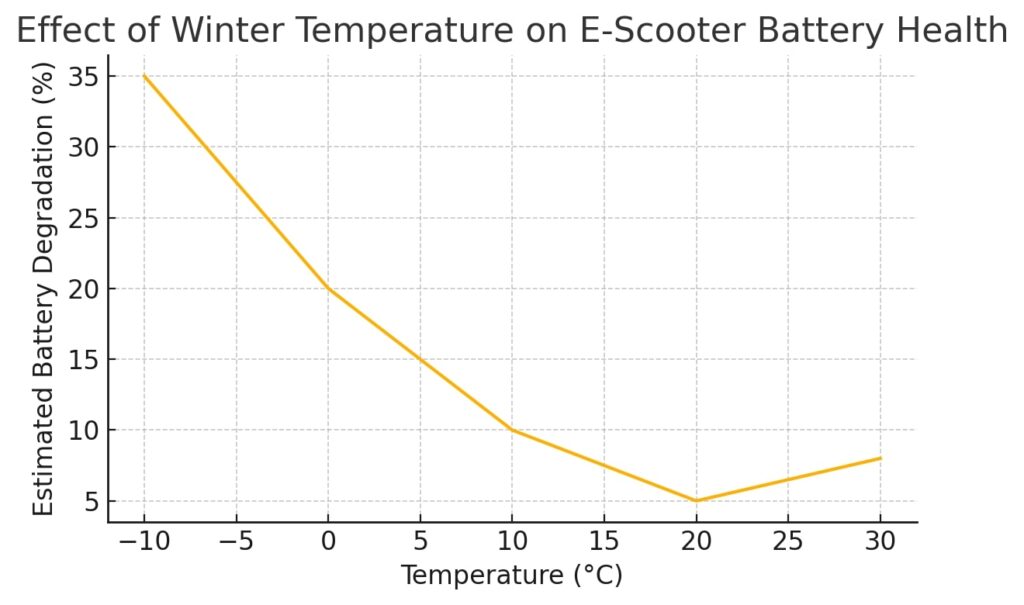
To understand why winter storage is so important, here’s a graph showing how low temperatures affect battery health:
Why Proper Winter Storage Matters
Electric scooters rely heavily on lithium-ion batteries, which are highly sensitive to extreme temperatures. Cold weather causes the battery’s internal chemical reactions to slow down, which reduces capacity, increases internal resistance, and accelerates long-term degradation. Even the motor, display unit, throttle mechanism, and wiring can suffer from exposure to moisture, frost, and condensation.
Incorrect winter storage can lead to:
- Battery failure or permanent capacity loss
- Controller or wiring corrosion
- Cracks in tyres due to low temperature
- Reduced range when riding
- Charging issues
- Slow acceleration and performance lags
Proper winter storage helps maintain the scooter’s battery health, protects electrical components, and ensures that the scooter works perfectly when you bring it out again.
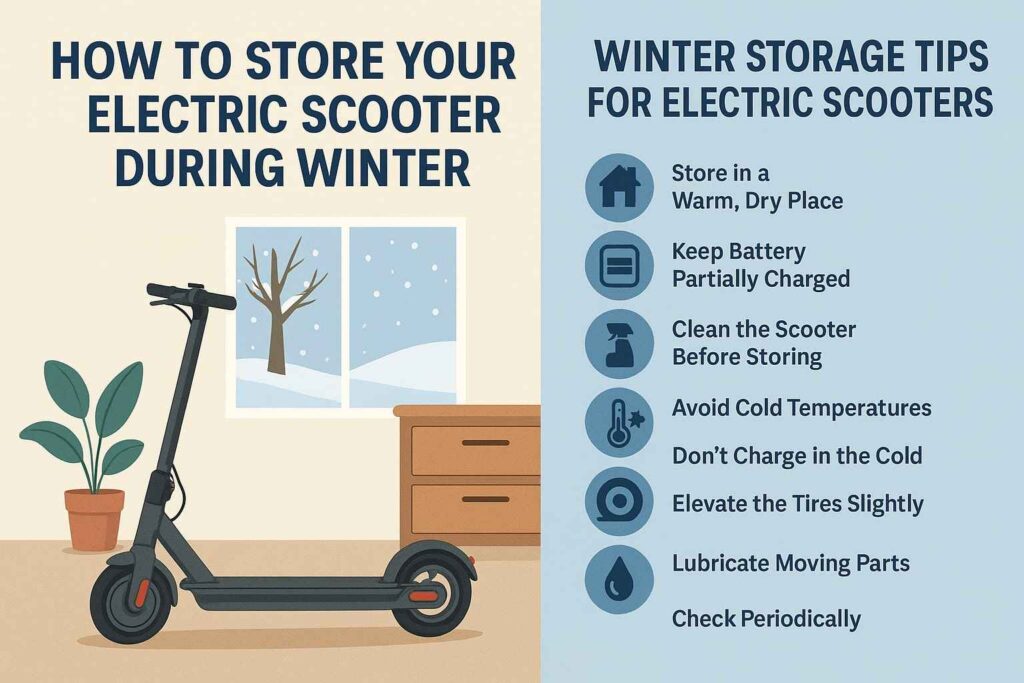
1. Store Your Scooter in a Temperature-Controlled Environment
The most important step in winter storage is keeping your scooter somewhere warm, dry, and protected from freezing temperatures. Lithium-ion batteries should never be exposed to temperatures below 0°C for extended periods.
Ideal storage location characteristics:
- Indoors
- Dry and moisture-free
- Temperatures between 10°C and 20°C
- Away from windows, cold drafts, or direct heat sources
Suitable places include bedrooms, closets, indoors near a wall, dry garages, or utility rooms. Avoid storing the scooter in sheds, balconies, or vehicles—these areas often reach freezing temperatures and damage battery cells.
2. Charge the Battery to the Proper Storage Percentage
One of the most common winter storage mistakes is leaving the battery fully charged or fully empty. Both extremes accelerate degradation during long periods of inactivity.
Best battery percentage for winter storage:
- 40% to 60% charge
This is the “sweet spot” for lithium-ion batteries, reducing internal stress and preserving long-term health. A fully charged battery puts chemical stress on the cells, while a fully depleted battery risks falling into deep discharge and becoming unusable.
Check battery level monthly
Even when unused, batteries lose charge slowly. Top up the battery back to about 50% if it drops below 30%.
3. Clean the Scooter Thoroughly Before Storing It
Dirt, dust, mud, and moisture become much harder to clean over time and can cause corrosion, rust, and electrical issues.
Cleaning steps before winter storage:
- Wipe down the frame with a damp cloth
- Clean the wheels and tyres
- Remove mud from the underside
- Dry the scooter completely
- Avoid spraying water directly into electrical components
- Clean around the charging port gently
Storing a dirty scooter can trap moisture, accelerating rust and weakening metal components.
4. Protect the Battery From Freezing Temperatures
Lithium-ion batteries suffer the most damage when exposed to freezing conditions. Even if the scooter itself is stored in a cold place, always remove the battery if your model allows it.
Why removing the battery helps:
- Batteries are lightweight and easy to store indoors
- Indoors provides consistent temperature
- Protects the most expensive component of the scooter
If your battery is built-in, store the scooter in the warmest part of your home.
5. Do Not Charge the Scooter in Cold Temperatures
Charging a lithium-ion battery in cold conditions can permanently reduce its capacity. If you must charge it, allow the scooter to warm up indoors for at least two hours before plugging it in.
Never charge your scooter if it feels cold to the touch.
Cold charging is one of the fastest ways to damage a high-quality battery.
6. Raise the Scooter Slightly to Protect the Tyres
When left in one position for months, your scooter’s tyres can develop “flat spots,” especially in cold weather when rubber stiffens.
To prevent this:
- Store the scooter on a stand
- Lift the wheels slightly off the ground if possible
- Move the scooter occasionally to shift the weight
Inflate the tyres to recommended pressure before storing to avoid cracks or deformation.
7. Lubricate Moving Parts Before Storage
Winter air is dry, and long periods of inactivity can cause hinges, folding mechanisms, brake levers, and springs to stiffen or rust.
Apply light lubrication on:
- Folding joints
- Brake levers
- Kickstand
- Suspension components
- Visible metal bolts
Do not over-lubricate—excess oil attracts dust.
8. Disconnect or Turn Off the Scooter Completely
Some scooters remain in a low-power standby mode even when not in use. Over time, this drains the battery. Before storing:
- Turn the scooter fully off
- If available, activate transport/storage mode
- Disconnect removable batteries
This reduces slow power drain and increases battery life.
9. Protect the Scooter From Moisture and Condensation
If stored in a garage or basement, moisture buildup can cause corrosion. Winter temperature changes often create condensation on metal parts.
Protection methods include:
- Using a breathable cover (not plastic)
- Keeping the scooter off concrete floors
- Using moisture absorbers in the room
- Ensuring proper ventilation
Avoid wrapping the scooter in airtight plastic—it traps moisture inside.
10. Inspect the Scooter Occasionally During Winter
Even if you don’t plan to ride until spring, check the scooter once a month.
Look for:
- Battery charge level
- Signs of rust
- Loose wiring
- Tyre pressure
- Moisture buildup
A quick monthly inspection prevents unpleasant surprises in spring.
Amazon Affiliate Product Suggestions
1. Electric Scooter Storage Cover
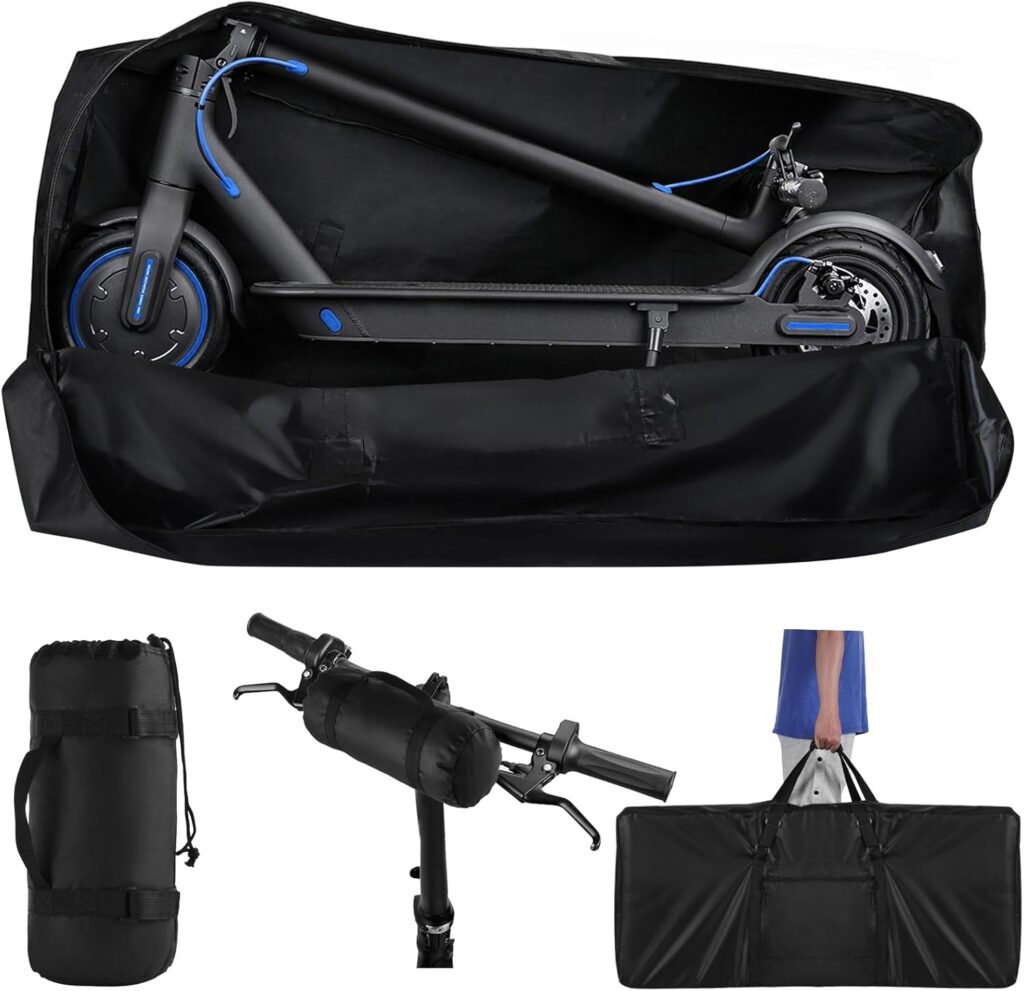
Keeps dust and moisture away while allowing airflow to prevent condensation.
2. Lithium-Ion Battery Storage Bag (Fire-Resistant)
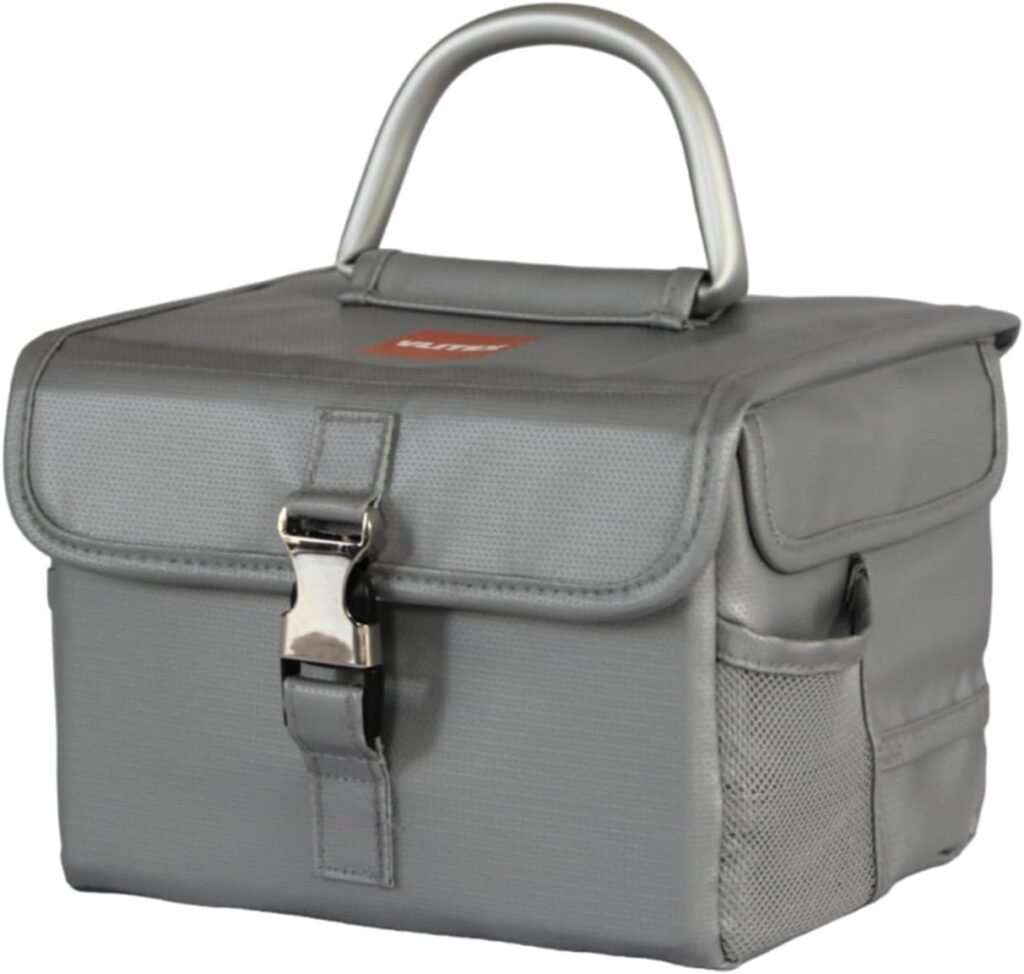
Perfect for safely storing removable scooter batteries indoors during winter months.
Final Thoughts
Winter is tough on electric scooters, especially the battery, motor, and electrical system. But with proper care, your scooter can last for years and maintain excellent performance even after months of cold weather. By storing it indoors, maintaining the battery at optimal charge, cleaning it thoroughly, protecting it from freezing conditions, and performing regular checks, you ensure that your scooter will be ready to ride the moment spring arrives.