
The battery is the heart of your electric scooter. Whether you use your e-scooter for daily commuting, weekend rides, or occasional travel, the battery’s performance determines how far, how fast, and how reliably you can go. The more you take care of it, the longer it will last—and the better your scooter will perform.
In this detailed guide, you’ll learn how to increase your electric scooter’s battery life, prevent battery degradation, improve charging habits, and maintain long-term performance. This article includes all essential keywords such as electric scooter battery care, extend scooter battery life, lithium-ion battery tips, scooter charging best practices, battery maintenance, and more.
Why Battery Care Matters
Electric scooters use lithium-ion battery packs, the same type found in smartphones, laptops, and electric cars. These batteries naturally wear out over time, but how fast they degrade depends on:
- Your charging habits
- Riding style
- Temperature exposure
- Weight load
- Terrain
- Storage conditions
- Maintenance frequency
Good battery care can extend battery life by 1–3 years, saving you hundreds of pounds and avoiding unnecessary replacements.
Understanding How Electric Scooter Batteries Work
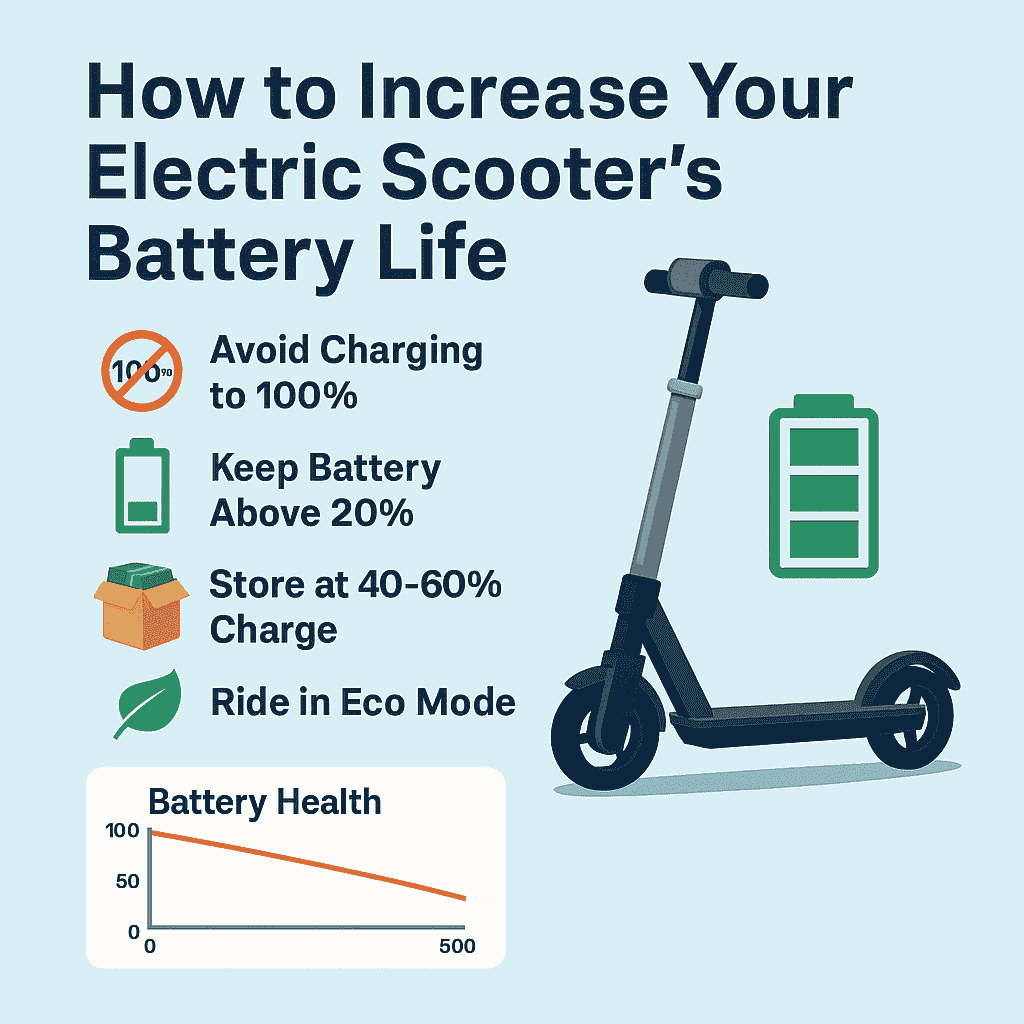
Most electric scooters use Li-ion (Lithium-ion) or LiFePO4 (Lithium Iron Phosphate) batteries. These batteries degrade with each charge cycle. One cycle is counted every time you charge from 0% to 100% (or combine partial charges that total 100%).
Here’s a simple chart:
| Charge Cycles | Approx Battery Health |
|---|---|
| 0 cycles | 100% |
| 100 cycles | 95% |
| 200 cycles | 90% |
| 300 cycles | 85% |
| 400 cycles | 80% |
| 500 cycles | 75% |
The goal is to slow down this decline with smart habits.
1. Avoid Charging the Scooter to 100% Every Time
Lithium-ion batteries last longer when kept between 20% and 80%. Charging to 100% causes high voltage stress and accelerates chemical aging.
✔ Best Practice:
- Daily rides: charge to 80%
- Long rides: charge fully only when needed
- Never leave it plugged in after reaching full charge
Some premium scooters even include Eco Charging or 80% Mode—always enable it.
2. Never Let Your Battery Drop Below 20%
Deep discharge is harmful for lithium cells. When the battery hits 0%, the voltage drops to a point where cells become unstable and degrade faster.
✔ Best Practice:
- Recharge once you hit 25–30%
- Avoid riding until the scooter automatically shuts off
- Store batteries at 40–60% if not using for long periods
3. Charge at the Right Temperature (Avoid Heat & Cold)
Temperature is one of the biggest factors in battery damage.
❌ Harmful:
- Charging in hot environments
- Leaving the scooter in direct sunlight
- Riding in extreme cold
- Charging below 0°C or above 40°C
✔ Best Charging Conditions:
- Room temperature: 10°C to 30°C
- Indoor environment
- Avoid moisture, humidity, and metal surfaces
If your scooter feels hot after riding, let it cool down 20–30 minutes before charging.
4. Use the Original Charger Only
Every charger has a specific voltage and current rating. Using third-party or fast chargers can:
- Overheat the battery
- Reduce lifespan
- Cause unstable voltage
- Damage internal cells
✔ Always use:
- Original manufacturer charger
- Or a certified replacement with identical specs
Never mix chargers from different scooters.
5. Don’t Ride Aggressively
Your riding style impacts battery drain more than you think.
❌ Avoid:
- Constant full-speed riding
- Rapid acceleration
- Hard braking
- Riding uphill at full throttle
- Heavy loads
✔ Better Habits:
- Maintain steady speed
- Use Eco Mode
- Coast when possible
- Slow acceleration
- Ride on flat terrain when able
Smooth riding gives 20–40% more range per charge.
6. Keep Tyres Properly Inflated
Under-inflated tyres increase rolling resistance, forcing the motor to consume more power.
✔ Ideal tyre pressure:
- Typically 40–50 PSI (varies by model)
- Check manual for recommended PSI
- Inspect tyres weekly
Proper tyre inflation increases range and reduces motor stress.
7. Reduce Weight Load When Possible
The heavier the load, the more power the scooter uses. Extra weight shortens battery life and puts strain on the motor.
✔ Tips:
- Avoid carrying unnecessary items
- Use a lightweight backpack instead of a front-hanging bag
- Choose scooters with higher load capacity if you’re a heavy rider
8. Avoid Steep Hills When Possible
Riding uphill forces the motor to draw maximum current, heating the battery and drastically draining power.
✔ Alternatives:
- Take flatter routes
- Slow down uphill
- Step off and walk for very steep slopes
Climbing hills daily accelerates battery wear significantly.
9. Turn Off Lights & Features When Not Needed
Some scooters include:
- Bright LED headlights
- Deck lights
- Bluetooth mode
- Built-in navigation screens
These features draw additional power.
✔ Range-saving tips:
- Use lights only at night
- Turn off Bluetooth when not using the app
- Disable extra lighting modes
Small savings add up over long-term riding.
10. Store the Scooter Correctly
Improper storage kills batteries faster than riding.
❌ Bad Storage Conditions:
- In a hot car
- Outdoors
- Damp basement
- Next to heaters
- Fully charged or fully drained
✔ Good Storage:
- Store at 40–60% battery
- Temperature between 15–25°C
- Indoors and dry
- Charge every 30 days if unused
Batteries degrade naturally even when not used—proper storage slows this down.
11. Keep Your Battery Clean and Dry
Moisture and dust can enter the battery connectors and short circuits.
✔ Tips:
- Wipe your scooter after rainy rides
- Never spray water directly into charging port
- Always close the rubber charging-port cap
- Clean dust from the deck regularly
12. Avoid Overcharging Overnight
Modern chargers may have auto-cutoff, but keeping the battery at high voltage (100%) for long hours stresses the cells.
✔ Best Practice:
- Charge during the day
- Unplug after reaching desired level
- Use a small timer plug if you forget easily
13. Update Your Scooter Firmware
Some electric scooter brands optimize battery management with firmware updates. These updates can:
- Improve charging efficiency
- Adjust power output
- Optimize motor functions
- Reduce internal heating
If your app notifies you of updates, install them.
14. Ride in Eco or Energy-Saving Modes
Eco Mode reduces:
- Speed
- Acceleration
- Power output
This significantly increases both range and battery lifespan.
Eco mode is ideal for:
- Beginners
- Daily commuting
- Long-distance riding
15. Keep the Battery Above 50% for Daily Use
If you ride your scooter daily, keeping the battery between 50–80% offers the best long-term health.
16. Monitor Battery Using the App
Many scooters offer mobile apps showing:
- Battery temperature
- Voltage
- Charging cycles
- Range
- Battery health percentage
Monitoring these values helps catch problems early.
17. Replace the Battery Only with Certified Models
If your battery is failing:
- Do NOT use cheap third-party replacements
- Buy only from the scooter manufacturer
- Make sure voltage and capacity match
Cheap batteries can overheat or even catch fire.
Recommended Products
1. Electric Scooter Outdoor Helmet

A lightweight riding helmet designed to stay cool during long rides while offering strong protection. Ideal for daily scooter commuters.
2. Portable Electric Scooter Bag
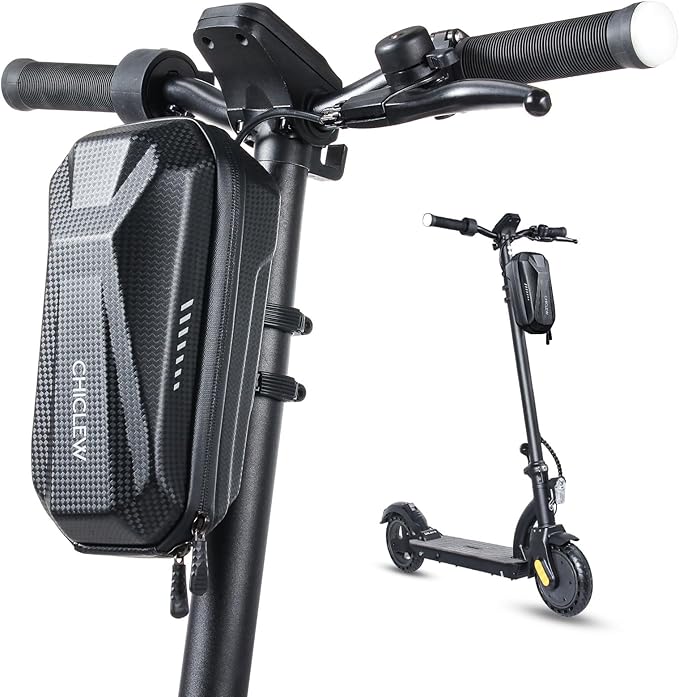
2L large capacity allows this electric scooter bag to hold wallet, phone, keys, earphones, sunglasses, charger, flashlights, gloves and so on while travelling.
Final Thoughts
Increasing your electric scooter’s battery life is all about smart habits. By adjusting how you charge, ride, store, and maintain your scooter, you can dramatically extend battery performance and lifespan. The tips above are practical for beginners and experienced riders alike.
When you take care of your battery, you ensure:
- Longer range
- Better performance
- Fewer repairs
- Lower long-term costs
- A safer and smoother ride
Implement these habits today, and your scooter’s battery will stay healthier for years to come.