
Electric scooters have become one of the most popular modern transport solutions. They’re compact, convenient, eco-friendly, and affordable compared to most urban transport options. But are electric scooters really worth it? Should you invest in one, or are there hidden downsides that most people don’t talk about?
This detailed guide gives you a balanced, honest, and practical breakdown of the true pros and cons of electric scooters, helping you make a clear and confident decision.
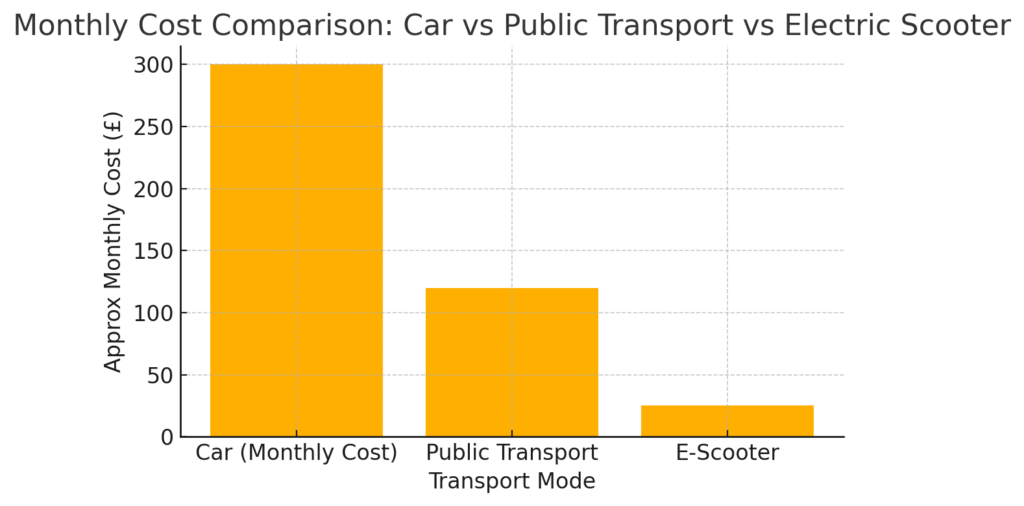
To start, here’s a simple comparison showing typical monthly costs of different commuting methods:
Are Electric Scooters Worth It? The Short Answer
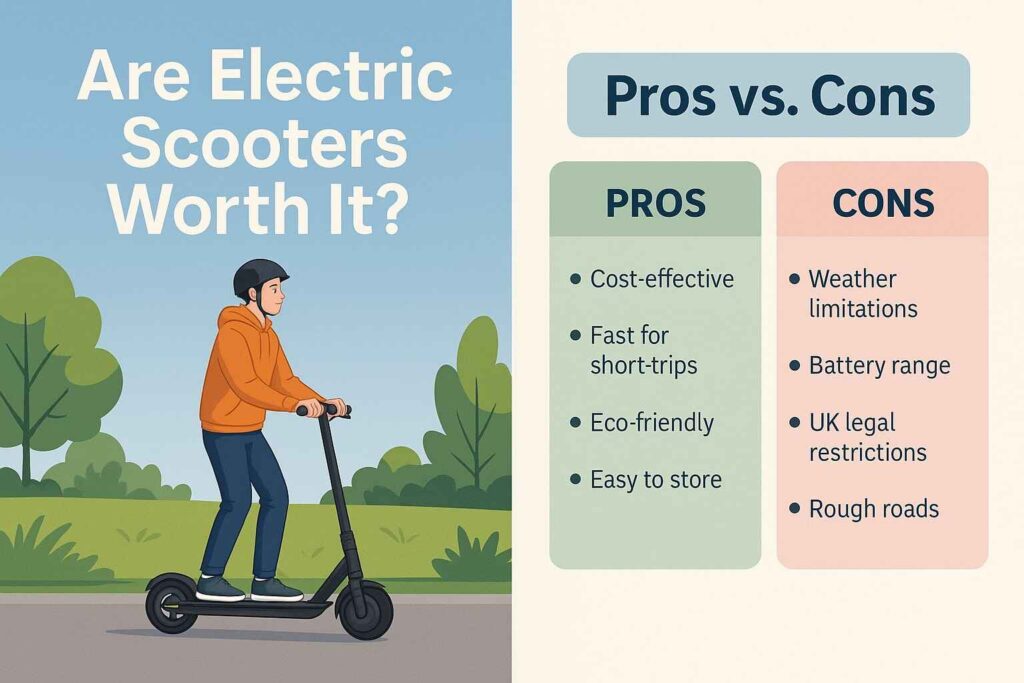
For many people—commuters, students, city riders, and eco-friendly travellers—yes, electric scooters are absolutely worth it. They save money, reduce travel time, and offer freedom from traffic.
But they’re not perfect. Some riders face limitations related to battery range, weather, terrain, or local laws. This guide explores both sides.
The Pros of Electric Scooters
1. Extremely Cost-Effective Transportation
Electric scooters are one of the cheapest transportation modes available today. Cars come with fuel, insurance, parking fees, tax, servicing, and unexpected repair costs. Public transport can also add up quickly.
E-scooters, on the other hand, cost very little to charge and require minimal maintenance.
Typical e-scooter cost per month:
- Charging costs: Very low
- Maintenance: Occasional tyre, brake, or screw checks
- No tax, no fuel, no heavy servicing
Over time, this makes e-scooters far cheaper than other transport modes.
2. Fast and Efficient for Short Trips
For short trips between 1–5 miles, e-scooters are often faster than cars, especially in busy UK cities.
Why?
- No waiting in traffic
- No searching for parking
- Can take cycle routes and quieter paths
- Immediate start—no need to warm up or plan ahead
They’re perfect for commuting, school runs, station transfers, or quick errands.
3. Eco-Friendly and Low-Emission
Electric scooters produce zero emissions during use, making them an excellent eco-friendly alternative to short car trips.
Additional environmental benefits:
- Lower noise pollution
- Less road congestion
- Smaller carbon footprint
- No fuel dependency
They also help reduce air pollution in urban areas.
4. Easy to Store and Carry
Electric scooters are compact and portable. Many models weigh between 12–15 kg and fold within seconds.
This makes them perfect for:
- Small flats
- Car boots
- Offices or workstations
- Public transport
- University campuses
You don’t need a garage or parking space—just a corner of a room.
5. Fun, Enjoyable, and Stress-Free Travel
Riding an e-scooter is simply fun. It feels light, smooth, and relaxing. Instead of sitting in traffic or waiting for a delayed bus, you can glide through the city and enjoy the journey.
The thrill of riding combined with the practicality makes e-scooters one of the most enjoyable ways to travel.
The Cons of Electric Scooters
1. Weather Limitations
Electric scooters are not ideal in:
- Heavy rain
- Snow
- Ice
- High winds
Most scooters are water-resistant but not waterproof. Wet surfaces also reduce tyre grip.
2. Battery Life and Range Can Be Limiting
Many budget e-scooters offer between 10–15 miles of range, which may not suit everyone.
Things that affect battery range:
- Rider weight
- Speed
- Terrain (hills drain the battery faster)
- Temperature (cold reduces range)
Higher-end scooters fix this problem, but they cost more.
3. UK Legal Restrictions in Some Areas
Private e-scooters currently cannot be used on public roads or pavements in the UK (unless laws change). Rental scooters are allowed in approved trial areas only.
This can limit when and where riders can legally travel.
4. Comfort Issues on Rough Roads
Some scooters have solid tyres or no suspension, making rides uncomfortable on:
- Cobbled paths
- Broken pavements
- Rough road surfaces
Comfort improves with:
- Pneumatic tyres
- Front or dual suspension
- Larger wheels
But these upgrades increase the price.
5. Risk of Wear and Tear Over Time
Like any vehicle, scooters age over time.
Common maintenance issues include:
- Tyre replacements
- Brake adjustments
- Battery degradation
- Loose screws
- Folding joint wear
Maintenance is still low compared to cars—but it’s not zero.
Who Should Definitely Buy an Electric Scooter?
E-scooters are worth it for:
Daily commuters
Save time, money, and stress during busy city routes.
Students
Affordable, quick, and perfect for campuses and nearby areas.
Urban residents
Ideal for grocery trips, station transfers, and inner-city journeys.
Eco-conscious riders
Perfect for reducing carbon footprint.
People replacing short car trips
Even replacing 2–3 weekly car trips saves money and emissions.
Who Might NOT Find an E-Scooter Worth It?
They may not be ideal for:
People in rural or remote areas
Long distances and poor road conditions reduce practicality.
Heavy rain or snow-prone regions
Weather dependency is a limitation.
Riders needing more than 20–25 miles per day
Unless buying a high-range model, this may be inconvenient.
People with steep hills everywhere
You’ll need a more powerful motor (500W+), which costs more.
What About Long-Term Value?
Good electric scooters last between 2–5 years with proper maintenance. Higher-end models last even longer. Considering the low charging cost and lack of taxes/fuel, they deliver strong long-term value.
Final Verdict: Are Electric Scooters Worth It?
In most cases, yes—electric scooters are absolutely worth it.
They’re affordable, eco-friendly, fast, practical, and fun to ride. They save time and money, cut down emissions, and provide a modern alternative to traditional transportation.
However, they’re not perfect for every rider. Weather limitations, battery range, comfort levels, and UK legal restrictions may affect some users more than others.
But for city commuters, students, and anyone with short daily trips, electric scooters represent one of the best investments in personal mobility today.