
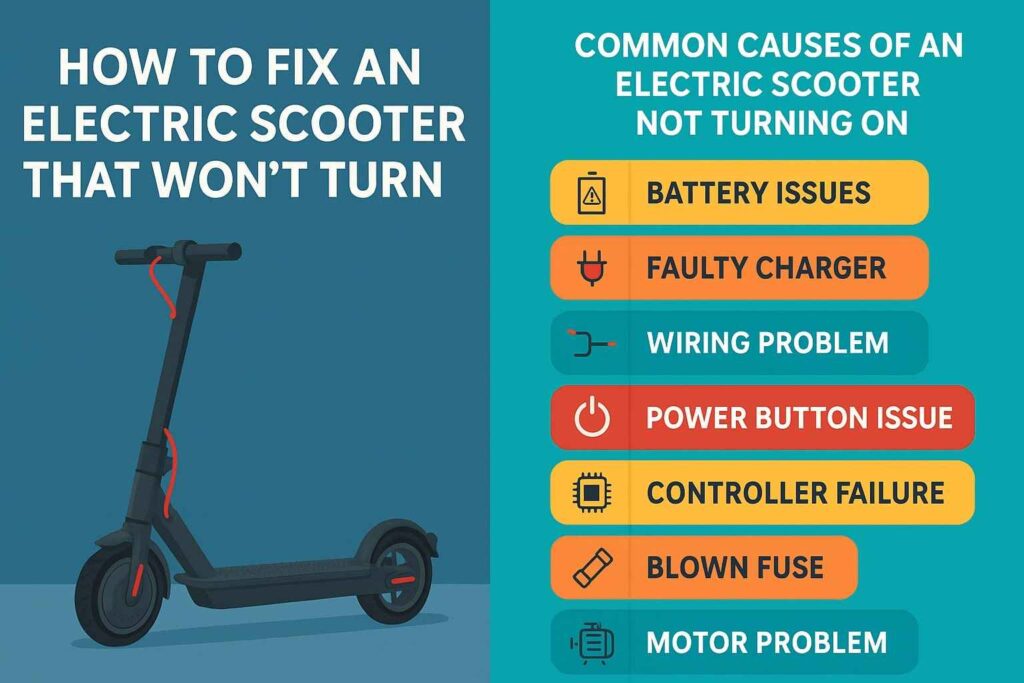
Electric scooters are incredibly convenient—until the moment they refuse to turn on. Whether you use your e-scooter for commuting, weekend rides, or short errands, a sudden power failure can be frustrating and confusing. The good news is that most electric scooters that won’t turn on can be fixed by understanding the root cause and performing a series of simple checks. From battery issues and wiring faults to controller failures and safety lockouts, there are many reasons an e-scooter might not power on. This detailed guide will walk you through each possible cause, explain why it happens, and provide clear solutions you can apply at home.
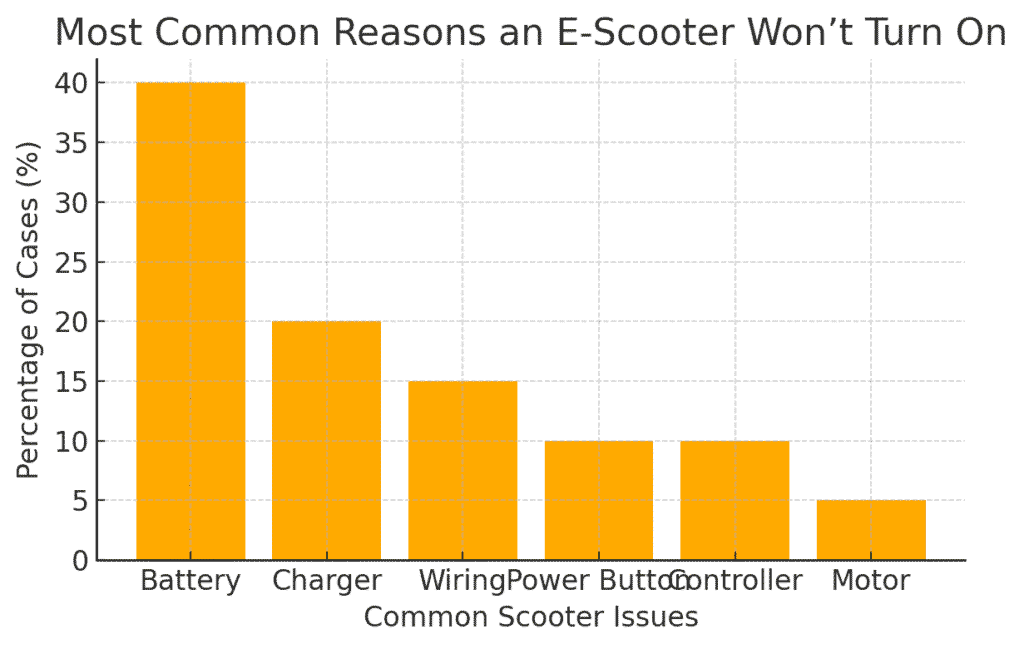
Before diving into the steps, it’s important to understand that when an electric scooter won’t turn on, the issue almost always falls into a handful of predictable categories. To help visualize it, here’s a chart representing the most common reasons an electric scooter fails to power up:
Understanding the Most Common Causes
Electric scooters depend on a combination of electrical, mechanical, and software components. A failure in any of these systems can prevent the scooter from turning on. The majority of issues are related to the battery—the heart of your scooter. Batteries degrade over time, lose capacity, or fail due to improper charging or long-term storage. Chargers, wiring, controllers, and the power button itself also contribute to power issues more often than most riders realize.
The good news? Most of these problems can be identified without professional tools, and many can be fixed quickly at home if you know what to check. Understanding these causes not only helps you fix the current issue but also prevents future failures.
1. Battery Issues: The Most Common Reason an E-Scooter Won’t Turn On
The battery accounts for the majority of “won’t turn on” problems. If the scooter’s battery is dead, undercharged, damaged, or disconnected internally, it simply will not power up.
What Happens:
- The battery may have discharged completely
- The battery management system (BMS) has locked the pack
- The scooter has been left unused for months
- A damaged cell prevents the battery from waking up
- The internal connector has loosened due to vibrations
How to Fix:
- Put the scooter on charge for at least 30–60 minutes
- Check whether the charging light is turning on
- Try a different wall socket
- Inspect the battery compartment if accessible
- Look for signs of swelling or damage (stop using if found)
If the scooter turns on only while plugged in, the battery is almost certainly faulty and needs replacing.
2. Faulty or Damaged Charger
Sometimes the problem isn’t the scooter at all—it’s the charger. If the charger isn’t delivering power, the scooter will remain dead even if nothing else is wrong.
Signs of a charger issue:
- Charger light stays green even when plugged into the scooter
- No indicator light at all
- Battery never increases in percentage
- You hear buzzing or smell something burnt
What to do:
- Try another compatible charger if available
- Check if the charger cable is cut or bent
- Ensure the charging port is clean and not loose
A faulty charger is one of the easiest issues to fix—simply replace it.
3. Loose, Damaged, or Corroded Wiring
Wiring is an often overlooked culprit. Electric scooters experience vibrations every time they ride over bumps or uneven roads. Over time, connectors loosen or wires crack.
What to check:
- Wiring under the deck
- The main power cable running to the handlebar
- Connectors from the battery to the controller
- Any signs of water damage or corrosion
If clear damage is visible, the wire or connector must be repaired or replaced. Sometimes simply reconnecting a loose cable is enough to bring the scooter back to life.
4. Power Button or Ignition Switch Failure
A power button may seem simple, but it’s part of a small circuit that can fail.
Symptoms of power button issues:
- Button feels stuck
- No “click” when pressing
- The scooter turns on randomly or only sometimes
- The dashboard lights flash but the scooter won’t start
What to do:
- Try holding the power button for 5–10 seconds
- Clean around the button to remove debris
- Inspect the button’s internal cable for looseness
If the switch is physically damaged, replacing the entire button module may be necessary.
5. Controller or Motherboard Failure
The controller acts as the brain of your electric scooter. If it fails, the scooter will not turn on even if the battery is fine.
Possible causes:
- Water damage
- Short circuits
- Overheating
- Firmware glitches
- Blown fuses
Signs of controller failure:
- No dashboard response
- Faint clicking noises
- Sudden shut-offs while riding
- Burnt smell from the deck area
Replacing the controller is usually straightforward but does require basic electrical knowledge.
6. Blown Fuse or Tripped Safety Cutoff
Some electric scooters come with built-in safety fuses or thermal cutoffs. If triggered, the scooter won’t power on until the issue is resolved.
Causes include:
- Overheating after long rides
- Sudden power surges
- Riding on steep hills
- Overloading the scooter with extra weight
Let the scooter cool for 15–30 minutes and try turning it on again.
7. Motor or Throttle Lockout
Although less common, the scooter may refuse to turn on if the motor or throttle is malfunctioning. Modern scooters include safety protocols that prevent powering on if throttle position is abnormal or the motor is shorted.
Symptoms:
- Scooter dashboard turns on, but the scooter won’t fully activate
- Error codes (varies by brand)
- Scooter turns off after trying to accelerate
Repair requires checking the throttle cable and motor connector.
8. Software or Firmware Glitch
Many modern scooters have digital dashboards and built-in firmware. Sometimes a glitch can prevent the scooter from turning on properly.
Fixes include:
- Resetting the scooter
- Disconnecting the battery for 10 seconds
- Restarting after a full charge
Manufacturers sometimes include hidden reset buttons—check near the bottom of the deck or inside the battery compartment.
Suggested Product
1. Universal Electric Scooter Charger (Adjustable Voltage)
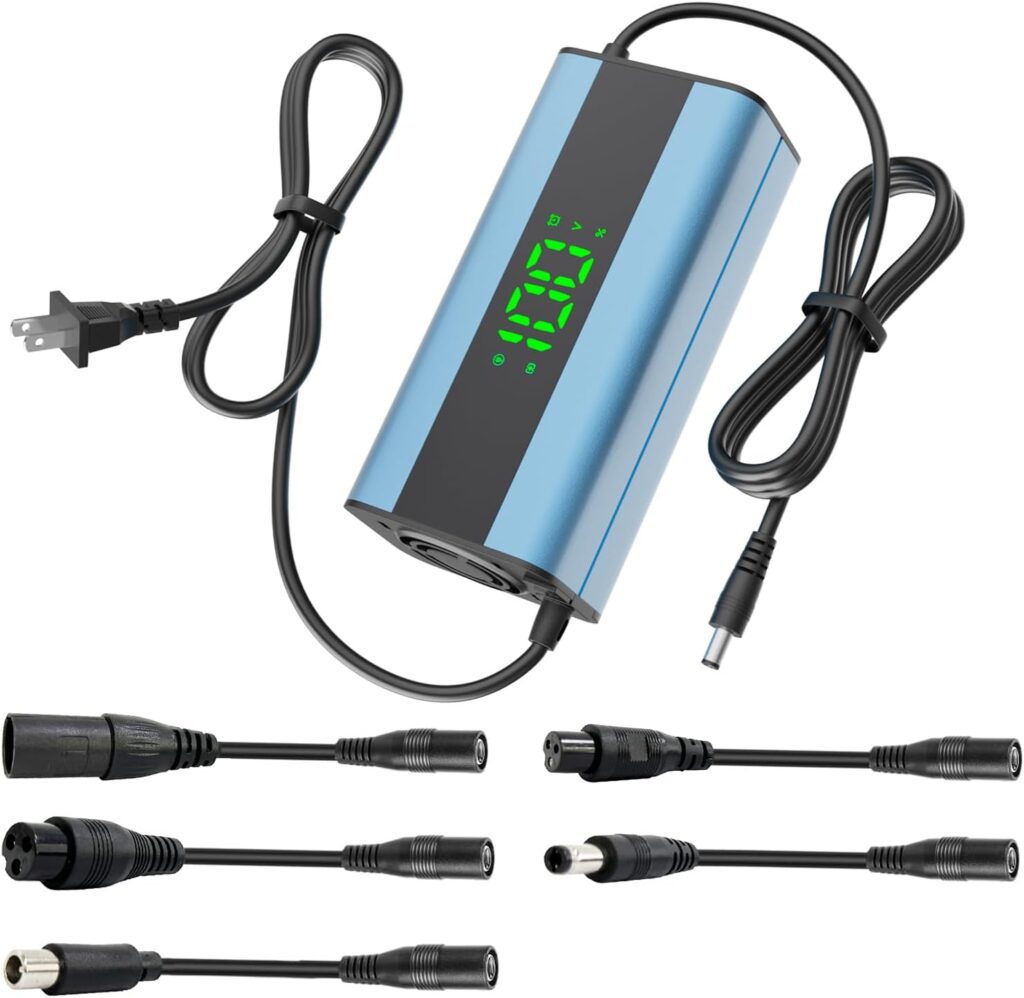
A perfect solution for riders whose scooters won’t turn on due to a faulty or inconsistent charger.
2. Scooter Lock with Bag, Scooter Locks Anti Theft
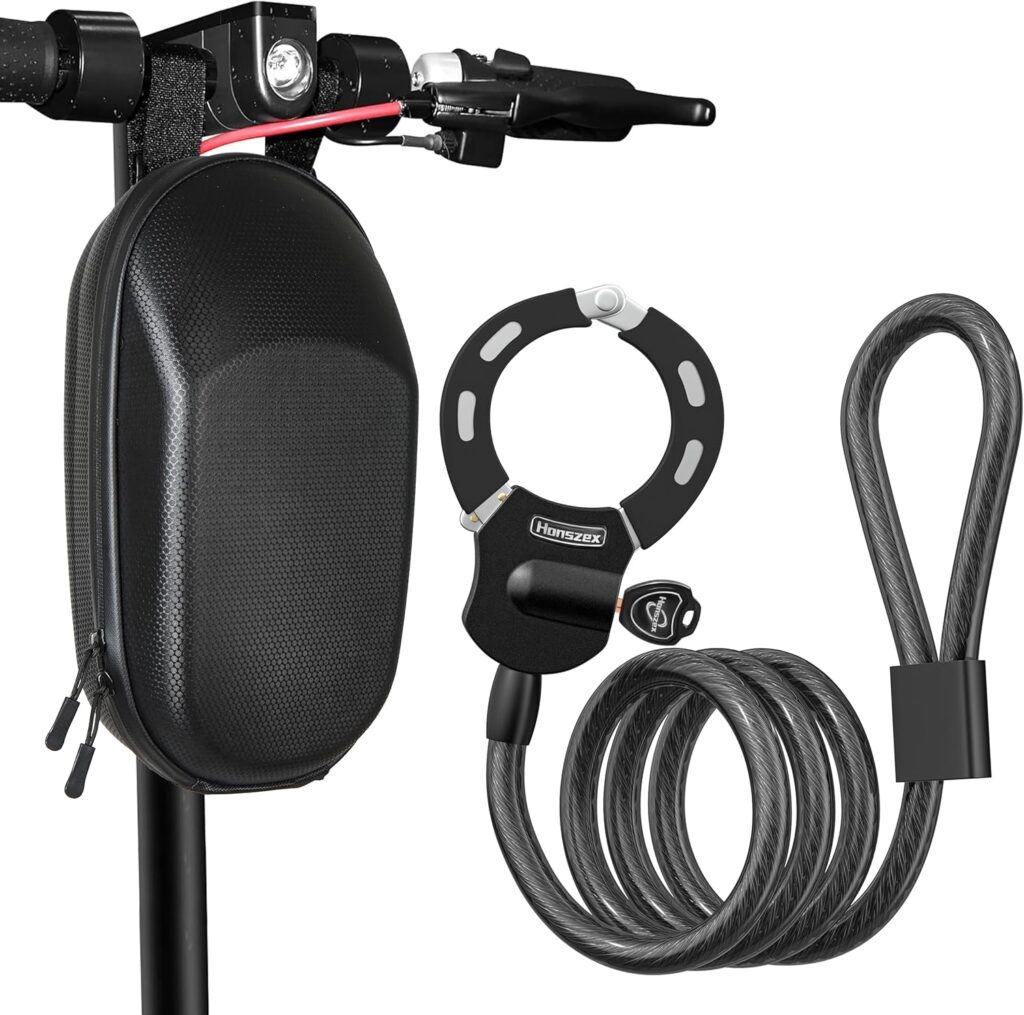
Prevent rusting after getting wet in rainy days, equipped with three keys to prevent losing the carried key and using the rest to unlock the door
Final Thoughts
An electric scooter that won’t turn on can be caused by something as simple as a loose cable or as serious as a failed controller. Understanding the common causes helps you diagnose the issue quickly and avoid unnecessary repair costs. In many cases, the fix is as simple as charging the battery properly, reconnecting a cable, or replacing a worn-out charger.
For more stubborn cases, especially involving water damage or controller failure, seeking professional repair may be the safest option. Regular maintenance, proper charging habits, and safe storage can significantly reduce the chances of facing power issues in the future. With the right approach, your electric scooter can be up and running again in no time.